
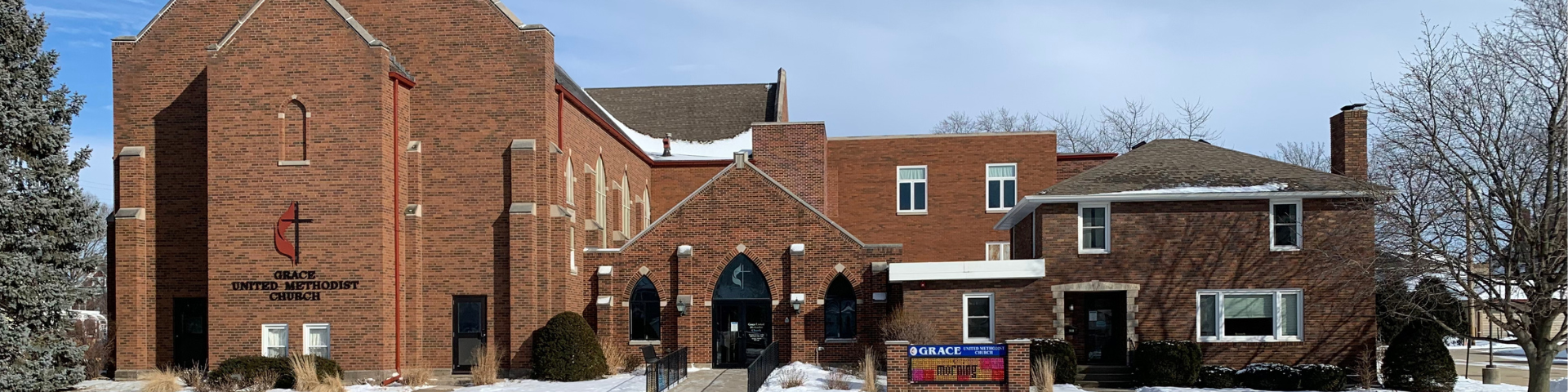
Geneseo’s Grace Church developed out of the German-speaking Evangelical Church. In 1856, the Rev. Conrad Speilman, pastor at Loraine Evangelical Church, organized the Evangelical Church of Geneseo.
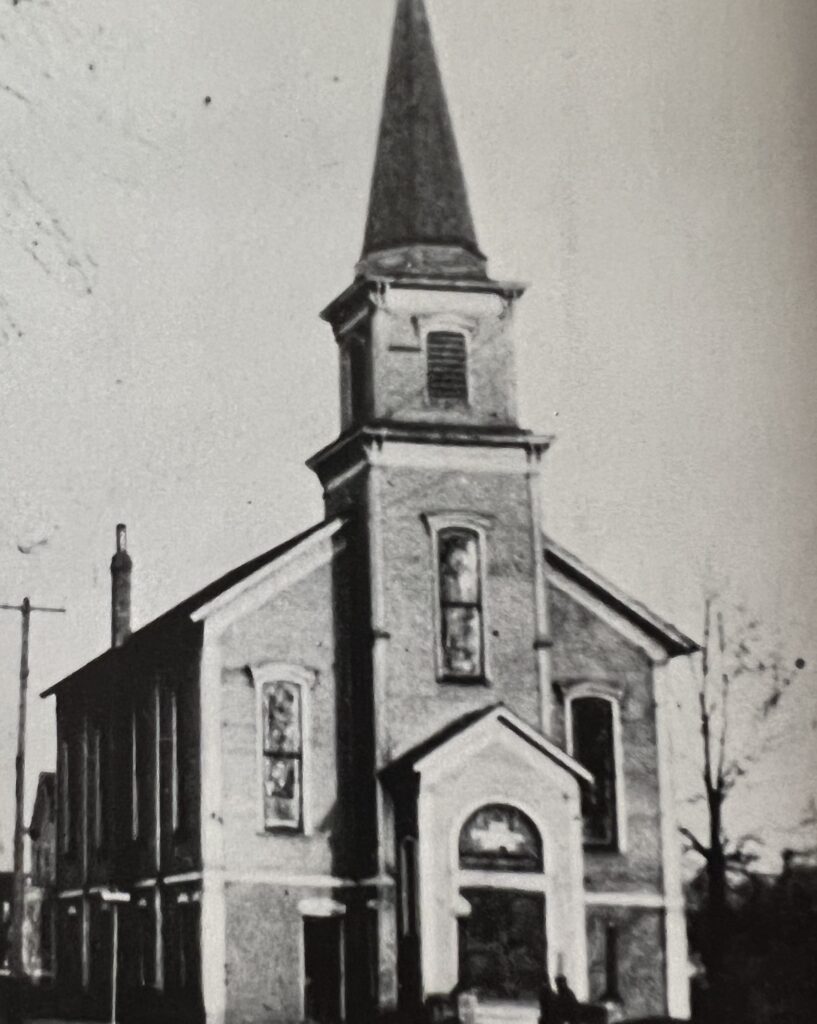
In the fall of that year, 16 members were formed into the first class in the home of Jacom Thrierer. Mr. A. Lieberknecht was elected class leader and Mr. Christ Ott was elected assistant.
Meetings were first held in the home of J. Beyers, a member of the Methodist church who felt kindly disposed toward the German-speaking congregation which had no church home of its own.
The early congregation met once every two weeks in homes and, briefly, in a store building until a storm razed the building.
In 1860, a church was built on the northwest corner of East Main and South Spring Streets. It was used for 10 years. The building was later moved to 544 N. Aldrich Street and remodeled into a home.
Until 1865, the church was an appointment on the Geneseo or Loraine Circuit. In 1865, Geneseo was made a mission, and the Rev. J. Dengel came as its first pastor.
On Dec. 3, 1869, the congregation held its first service in a new building and became Zion Church of the Evangelical Association.
Regular revivals gained members for the church, and the total membership was 150 by the spring of 1879.
The year 1890 saw a division in the Zion congregation. One group built a church on Palace Row and Center Street. It was dedicated as Grace Church on October 29, 1893, by Bishop R. Dubs. A parsonage was erected south of the church in 1898. The other group repaired their church and parsonage at a cost of $7,000 in 1895.
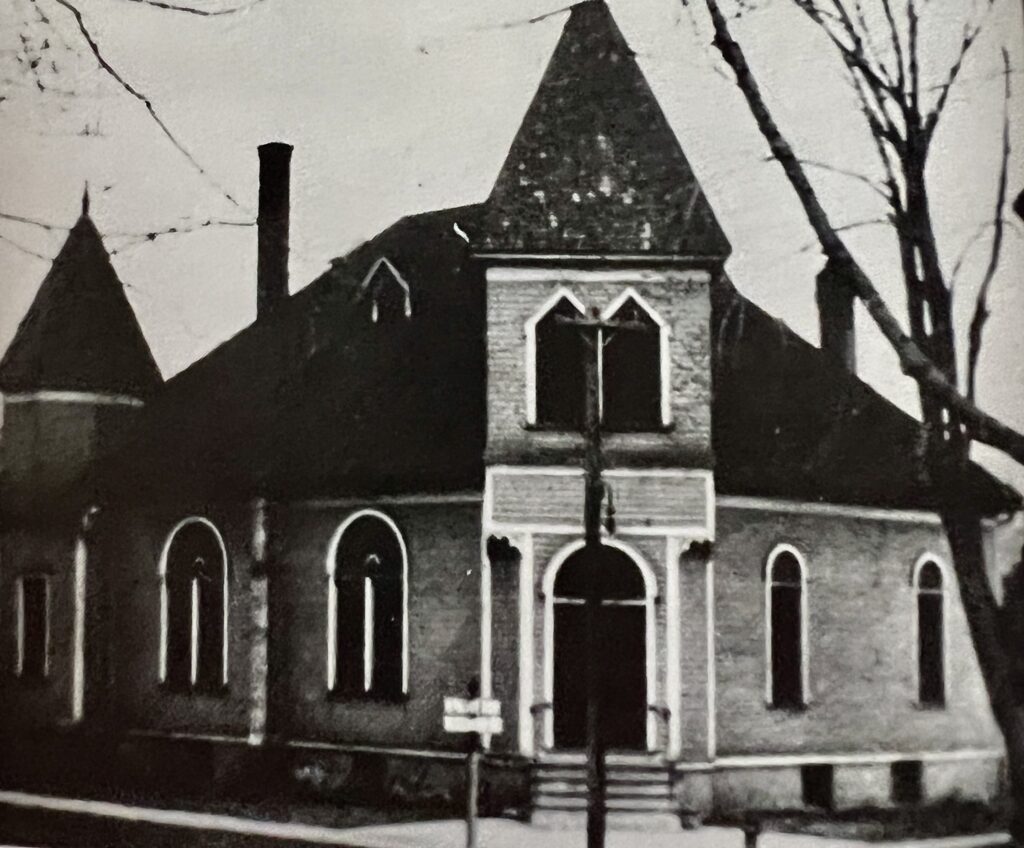
The English language was introduced into the morning service in 1899.
In the spring of 1923, under the pastorate of the Rev. John Marth (Zion Church) and the Rev. F. A. Hoerner (Grace Church), the two churches merged.
They were joined by Mizpah Mission Church, a rural Swedish-language church located north of Geneseo. For many years, the Mizpah Mission was served on Sunday afternoons by Swedish-speaking ministers from Peoria and Princeton. Later records describe that church as the Mizpah Evangelical Mission, which was eventually served by English-speaking Evangelical clergymen from Geneseo.
The Mizpah members, as automobiles shortened the distance to Geneseo, began to attend Grace Church, which was now using the English language in services.
The merger prospered, and in 1930, the congregation spent $60,000 to build its current church building at Center and Palace Row. The building was dedicated Dec. 4, 1930 by Bishop L.H. Seager. The Rev. C.H. Wykle was pastor at the time.
The prior Grace Church was torn down to make way for the new church building, while the former Zion Church building was sold and remodeled into a bungalow.
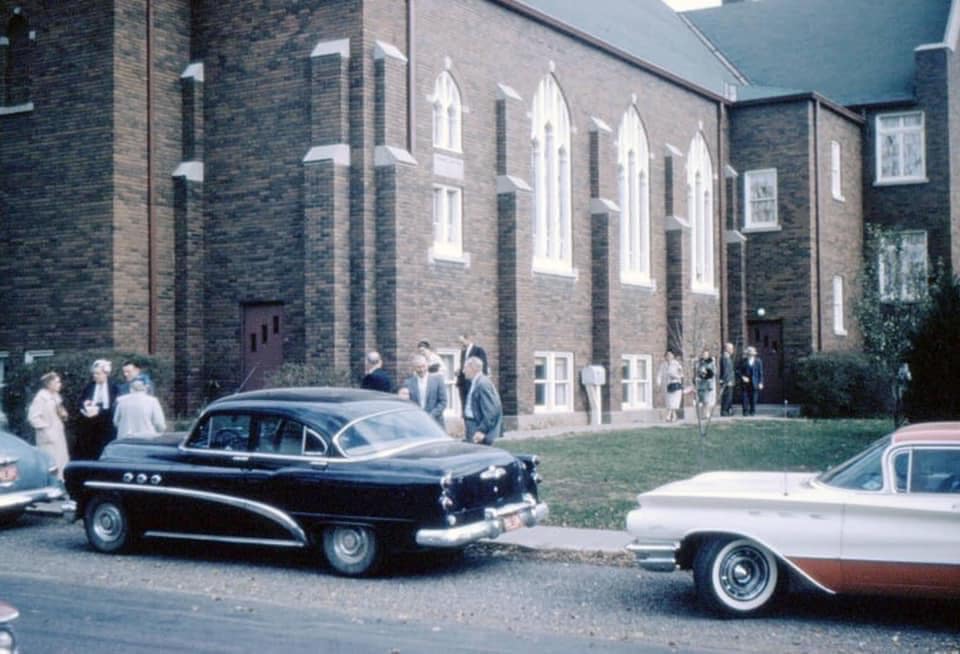
In 1946, the Evangelical denomination united with the United Brethren in Christ, and Grace Church became known as Grace Evangelical United Brethren Church.
In 1952, a brick parsonage was erected next to the church building.
In 1968, the Evangelical United Brethren Church united with the Methodist denomination, and Grace received its present name: Grace United Methodist Church.
Although the present congregation is a result of three denomination mergers, all three were of the Wesleyan tradition.
In 1974, an educational wing was added to the south side of the church building.
In 2002, the church was made handicapped accessible through the addition of an elevator. At that time, an expanded vestibule area was added and the parsonage was incorporated into the building to serve as office space.
Sources: